Showing posts with label Coronation. Show all posts

Royal fever in Johor

The Johor sultan's crown printed in the official
souvenir programme for the
coronation of Sultan Ismail as Johor Sultan
Ready or not, I’m swept along with the rakyat of Johor in an infectious surge of Royal Fever.  

All over the city, an increasing number of billboards, banners and buntings are put up with the official coronation logo to send well-wishes to His Royal Highness Sultan Ibrahim on his coronation.  

Since last week, rows upon rows of Johor state flags strung across the roads are furiously flapping in the breeze like a waving canopy over passing cars.  

In the last few days, many road users are taking detours to get to their destinations as several roads in the city are closed to facilitate rehearsals.

The official Johor crest for the
coronation of HRH Sultan Ibrahim in March 2015

All eyes will be trained on Johor for the coronation of HRH Sultan Ibrahim on March 23 as the fifth sultan in the history of modern Johor.  

The city is doing everything to spruce up public places while the relevant authorities – in the palaces and throughout the city – are on their toes to ensure that all plans will go smoothly and securely.  

Local and foreign guests are descending on our beloved city and nothing should go amiss as we roll out the proverbial red carpet to welcome them.

The Johor sultan’s coronation is a historic day that’s unique to Johor as it combines Islamic, Malay and Western culture and rituals that are exclusive and based on Johor royal traditions.
  

Sultan Abu Bakar – the Father of Modern Johor (1862 to 1895) – adopted the English tradition of pledging the oath of loyalty to the monarchs, the royal regalia and exchanged the traditional Malay head-dress for a crown that was made by royal jeweler, J W Benson of London.  

Sultan Abu Bakar in his coronation
outfit complete with flowing robes;
Note the crown on table [Left]

For weeks, I’ve been immersed in “sultan stories” as I read history books on early Johor, did online research and looked up old photos.  

This exercise is both inspiring and informative as I discover the stories and people behind the names of roads and kampungs, as well as the palaces and hills in Johor Baru.  

I’m literally saturated by a great deal of information but it’s good to know who’s who, what’s where in and around JB and which buildings no longer exist in our fast developing city. 

Then I get a call from a friend telling me about someone who wants to show me souvenirs in his family’s collection from the last sultan’s coronation 55 years ago.  

I’m glad I arranged to meet him because he is proof that I’m not alone in this bout of royal fever! He is probably having a more serious “attack” because he is witnessing the sultan’s coronation for the second time in his lifetime!

When I left Eh He, the place where our meeting was held, I spotted my friends, the Liew brothers in front of their shop, Johor Heng Photo Studio situated at the corner of Jalan Trus and Jalan Ibrahim. [Update: This vintage photo studio has ceased operations and now closed.]

Their father, Liew Wee Peng, started as an employee with the studio when he moved to JB in 1946 and at the demise of the owner, Heng Kok Wee, he took over the business and retained the studio’s established reputation.  

The senior Liew also took over the role as a royal photographer and a number of his old photographs of Sultan Ibrahim Almarhum Sultan Abu Bakar are still displayed in the upstairs studio. 

The Sultan and his consort's crowns featured in
an article published in the Chinese newspapers
The brothers, Liew Ah Lek (a k a Alex) and Liew Kok Choy, invited me in for a chat and the topic inevitably went to the sultan’s coronation because even Sin Chew Jit Poh, the Chinese newspapers they read, featured the sultan’s crown in an article.  

Kok Choy turns to that page and points the article out to me but I can only admire the photos because I don’t read Chinese.  

He looked at me, hesitated a moment and then started to read the article again line by line, translating it into English for me.
 
I listened carefully and was glad the detailed description he translated tallies with what I already know about the sultan’s crown and the smaller crown for his consort.  

I can hear a tinge of awe and admiration in his voice as he read out that Johor is the only state in the nation where the sultan wears a crown and has a coronation ceremony.  

I’m sure he is familiar with the sultan’s coronation because we are in their old studio surrounded by priceless photos of several members of the Johor royal family.

This vintage photo studio has
ceased its operations and now closed

As I look around, my eyes are riveted to shots of Sultan Ibrahim and Lady Marcella, and other photos with a young Princess Mariam.  

I remember being fascinated by Princess Mariam when she visited our school with Lady Marcella and how my classmates and I were so thrilled to meet a stylish princess.  

I can never forget her chic elegance with her long hair tied in a pony tail, her simple but smart outfit and those fashionable shades!

While looking through my collection of photos, I discovered a shot I took for my story on the Raffles Hotel Museum, Singapore.   

It was of an exhibit of a pair of shoes with matching evening bag made of gold fabric and a vintage-looking blouse designed by Doris Geddes Singapore Couture that belonged to Lady Marcella. Displayed alongside was a newspaper cutting from the Straits Times headlined, “Sultanah crowned in day of splendour” and “The gown: East and West,” that described how the design and fabrics were influenced by Asian and Western culture.

A newspaper cutting dated October 1955 I saw
in the Raffles Hotel Museum, Singapore
From photos I’ve seen of Lady Marcella, I can only imagine how stunning she must have looked in the coronation gown designed in pink and silver, as illustrated in the newspaper report with details of the gown and accessories described in the copy.  

It’s exciting that the Geddes couture collection was housed in The Little Shoppe, Raffles Hotel Singapore since 1947 and her designs are still in demand among vintage clothes collectors.  

With this beautiful outfit in mind, I cannot wait to see Her Highness Raja Zarith Sofiah in all her finery as she was personally involved in the design of her coronation attire.

In keeping with royal family traditions, on the day before his coronation, HRH Sultan Ibrahim will pay his respects and offer prayers to his ancestors interred at the Royal Mausoleum at Bukit Mahmoodiah and at Telok Belanga in Singapore.  

A section of the Kembara Mahkota exhibit
in the Kota Tinggi History Museum

This trip to Singapore clearly reflects the connection the Johor royal family has with Telok Belanga, the place where Temenggong Abu Bakar Sri Maharaja lived when he succeeded his father to the Johor throne.  

The Baju Melayu Telok Belanga style of the Malay traditional costume preferred by His Highness was widely worn in Johor in the 19th century and its popularity flourished during his reign. In 1862 this uniquely Johor style was recognised as the baju kurung Teluk Belanga

For the sultan’s coronation, at least nine different but related events started from March 16 in a grand 3-month long celebration for the rakyat to enjoy not just in the capital city but also in the districts.  

This tradition was probably put in place from the era of Sultan Ismail who had a good rapport with the rakyat and visited the districts regularly. This may have been the earliest form of the annual Kembara Mahkota that continued to be practiced by Sultan Iskandar and now Sultan Ibrahim and members of the Johor royal family.  

With all these activities lined up throughout the state, it looks like the effects of the royal fever are set to linger for some time now.

Coronation memories

Soo Kok Wah [Right] holding the souvenir
booklet while Yeo Si Guan [Left]
holds the cardboard plaque
“Can you speak Cantonese?” I was asked quite bluntly.  “Sure!” I answered confidently because I’m quite sure I will find the right vocabulary to chat with Soo Kok Wah, 72, who is Cantonese and eager to share his memories of the previous sultan’s coronation with me.  

I’m meeting Soo, a member of the family who used to operate Soo Peng Hang Press, a leading printing company in Johor Baru back in the 1960s.

I’m at Eh He for our appointment and the moment the introduction formalities are over, Soo did not hesitate to show me two souvenir items from the previous coronation – a souvenir booklet and a cardboard plaque with the official logo for the sultan’s coronation.

The ad taken out by Soo's family business in the
Sultan's coronation souvenir booklet in 1960

In 1960, Soo was just 17 but he has distinct memories of the coronation of Sultan Ismail.  

At that time, his father and older brothers where running their business and he was still in Foon Yew High School.  He joined the family business after he completed his studies.

In the 1930s Soo Peng Hang Press was situated in the building where the OCBC bank is located and they shifted to the Foh Chong Building before relocating to their premises at No. 48 Jalan Ah Fook.  

Soo tells me to turn to the page in the souvenir booklet where their printing press bought advertisement space, to read the full name and address. 
 
I noted that in those days, this road name did not have Wong Ah Fook’s surname in it.

The cover design of the souvenir
booklet for the coronation of
Sultan Ismail in 1960

Soo explained that Sultan Ismail had a good relationship with the local Chinese community and they used to refer to His Royal Highness affectionately as, Lau Sultan which literally means the “elderly sultan.”  

The souvenir booklet, produced by the Chinese community to commemorate the sultan’s coronation, was printed in Chinese language with just its cover title in English. It reads: A souvenir commemorating the coronation of the Sultan of Johor.

He turns the pages and points out the various segments written in Chinese on the order of the coronation programme that included a detailed timetable when the newly-crowned sultan will visit the various districts.  

I learnt that Sultan Ismail had a good rapport with the rakyat and was already visiting the districts regularly.  

It occurred to me that this might have been the earliest form of the annual Kembara Mahkota that continued to be practiced by the late Sultan Iskandar and now Sultan Ibrahim and the royal family.

There were also photos of the crown that’s unique to Johor with its description, the royal couple – Sultan Ismail and Sultanah Aminah – and brief information on Chinese businesses that were established in JB during the sultan’s reign.  

From the number of advertisements printed in the booklet, I get an impression that the business community was united in their effort to commemorate the sultan’s coronation.

A photo of Sultan Ismail and
Sultanah Aminah in the souvenir
booklet produced by the Johor
Chinese business community

One of his favourite memories of Sultan Ismail is the printing of Hari Raya cards.  One particular year, the sultan wanted to print his greeting cards using the Gothic font, a typeface similar to the one used by the older version of the Straits Times masthead.  

The Government printing department did not have this font so they tried to track it down from other printers and they finally found this particular font at Soo Peng Hang Press!

At that time, the machine they used employed the manual typesetting method and was a pedal operated unit.  

When Soo’s father was approached by the Government printers, he invited them to do the typesetting of the required words to create a mock-up for the sultan to review.  

Upon the sultan’s approval, Soo’s father let the Government printers borrow the required typeface to print the Hari Raya greeting cards for the sultan!

Soo clarified that the commemorative plaque is made from cardboard and was bought from a supplier for display at their printing press.  

He said that businessmen in town displayed a similar plaque next to their signboards during the sultan’s coronation celebration in 1960.  

After the celebration, the plaque was taken down and stored away but when he heard about the coronation of Sultan Ibrahim on March 23, Soo dug out these precious mementoes to share with his family and friends.

The commemorative plaque put up next
to business signboards at the
coronation of Sultan Ismail in 1960

Compared to the digitally created commemorative banners and buntings for the coronation of Sultan Ibrahim, the cardboard plaque produced for the coronation of Sultan Ismail some 55 years ago was quite good by the standards of the day.  

The design is simple and the ink is colour-fast and still shining quite brightly after so many years.  

It is interesting that the print on the bottom left reads: Coronation of H. H. Sultan, Sir Ismail, Johor, and used an honorific that recognised his knighthood honoured by the Queen of England.  

“Don’t forget to mention that the Sultan had a good relationship with the Chinese community,” Soo reminded me more than once and I reassured him that I will not forget. I cannot help suppressing a smile because I can sense his pride as he is privileged to witness yet another sultan’s coronation in his lifetime.  

Then I told Soo that he must look for old photos from his family album that I may use when next write a story about his family business in Johor Bahru.  

As I take my leave, I privately congratulate myself for doing quite well in conducting our conversation almost entirely in Cantonese.  I am a bit rusty but if I may say so, it was really not bad at all!

Pepper & Gambier Heritage

Ancient seal of the Gambier & Pepper Society
that features Jawi and Chinese characters and
the pepper and gambier motif [Right]


If you are in Johor, you cannot miss seeing the iconic motif of intertwined sprigs of pepper and gambier plants used consistently throughout the state on royal regalia, official crests and as part of the decor on public buildings and lamp-posts along the expressways.  

Invitation cards and souvenir programmes for official events and print material from the Johor royal household often carry a similar motif. 

This pepper and gambier motif is used so consistently as a state icon that its significance may inadvertently be lost and many do not know how the cultivation of these crops contributed to Johor’s economic progress.  

That is why the Johor Baru Chinese Heritage Museum embarked on a project to present the historical importance of these two crops in an exhibition on gambier and pepper entitled, Sharing of Hardships, now on till 18 Sept 2015.

Archive photo of gambier cubes drying in the sun [Right] while a supervisor [wearing white top] oversees a worker at a gambier farm in Johor in the 1800s

Pepper and gambier have earned a place of honour in Johor because their widespread cultivation played a vital role to boost the state’s economy in the 1800’s.  

With Europe as a major market, the peak of the gambier trade lasted from the 1830s to 1850s when Johor was the world’s largest producer of gambier.  

Before the invention of chemical dyes, the juice from gambier leaves was widely used for leather tanning and cloth dyeing. This industry put Johor on the world map and brought wealth to the local community. 

Tan Chai Puan sharing his knowledge at the
Johor Baru Chinese Heritage Museum

The introduction of pineapple canning in 1888 resulted in the expansion of the pineapple industry in Johor and the rapid development of the motorcar industry sparked off a very high demand for rubber.  

By the early 20th century, gambier was replaced by pineapple and rubber as the most important plantation crops in this region and with the development of chemical industries, the demand for gambier ceased and the plants virtually disappeared.  

While we still have pepper plantations here, there are hardly any gambier plants and not many Johoreans know what gambier is or have ever seen a gambier plant.

The History

At the museum I meet Johor cultural activist, Tan Chai Puan, who declared, “This was probably the most beautiful part of Johor’s history.”  

He explained the Chinese phrase for the exhibition title, Sharing of Hardships, and described how the pioneer planters in Johor shared bitter and sweet experiences through their hardship in unity as they successfully built the State’s economy, literally from the ground up.  

From documents he had studied in the Johor Archives, Tan suggested that Johor probably has the longest history of the 1Malaysia-concept because the Chinese and Malay communities in Johor shared a strong relationship since the 1800s.

Old map of Johor showing rivers and
kangchu settlements marked in dots (1849) and
squares (1859) with shaded areas that indicate
holdings owned by Tan Hiok Nee in 1874

Back then, gambier plantations in Singapore and the Riau Islands were successfully run by Chinese and Malay farmers.  

After being cultivated for 10 to 15 years the land around Kranji and Sembawang in Singapore was exhausted and infertile.  

So when Temenggong Daeng Ibrahim invited the planters to move to Johor to open the land for new plantations, the Chinese were ready to relocate.  

Immigrant Chinese with a strong pioneering spirit were attracted to the prospect of huge tracts of land, just waiting for them to clear for cultivation of pepper and gambier under the kangchu or River Lord system.  

Under this administration, planters who arrived from Riau and Singapore obtained a permit known as, surat sungai, from the ruler. 

A list of kangchu locations in
Johor in the 1800s

In the kangchu system, the River Lords could collect taxes and govern Chinese communities in their areas along the rivers.  

The permit holders were called kangchu’s or River Lords while kang means “river” in Teochew dialect, and a kangkar is the disembarking point, usually its middle or upper reaches along the river. 

Not long after Iskandar Petrie, (former name of Johor Baru) was established in 1855, the Chinese accepted Temenggong Daeng Ibrahim’s permits to establish plantations in Johor and they started to arrive by cargo-carrying barges or tongkang through Sungai Segget or the Segget River.  

The Teochew clan was the dominant Chinese clan who made Johor their new home and they settled in designated areas to cultivate pepper and gambier plantations in the kangchu system. 

At that time Iskandar Petrie was just a frontier outpost with a few huts occupied by fishermen and charcoal-makers near the river.  

It was surrounded by jungle and mangrove forests and a flagpole flying the Johor flag near a police post on a hill represented the presence of a government.  

Its capital, Tanjung Puteri, was situated at a coastal site that had the most convenient boat access to Singapore – opposite the end of Bukit Timah Road in Singapore.

I remember seeing some of the sultan’s hunting trophies preserved in the Royal Abu Bakar Museum, in Istana Gardens, and this gave me an idea of the types and sizes of wild animals that once roamed the dense Johor jungles.  

Besides being confronted by wild animals such as elephants and tigers, immigrants lost lives to strange diseases and the harsh environment as they braved physical challenges to clear the jungles and open up land through the rivers into Johor’s interior.  

The Exhibition

Black and White pepper exhibits

I have never seen a gambier plant but dried gambier cubes are displayed in the JB Chinese Heritage Museum along with a gambier plant cutter and a hook that was used to grab sacks of processed gambier.  

This was all I’ve seen but six months ago, the museum initiated a project to find out more about gambier cultivation and processing in order to set up an interesting and informative exhibition here.  

The teams from the museum made two visits to Indonesia where they discovered that farmers are still using traditional methods with very little mechanization in the process to harvest, boil young gambier leaves, press them to extract juice and dry the juice concentrate before it was shaped into a block, cake or cube form.

Gambier is a tropical shrub that can grow up to about two meters in height and has oval shaped leaves that can grow up to eight or 14 cm in length. In plantations, pepper and gambier plants were usually planted together as these plants share a symbiotic relationship and tend to grow entwined around each other.  

The remains of gambier leaves on the ground act as nutrients or fertilizers for pepper plants while protecting the pepper plant roots. 

Plantations in Johor sold their gambier to businessmen in Singapore, the main centre for trade in collecting and exporting the gambier produce, until the dawn of the 20th century.  

When Temenggong Daeng Ibrahim was succeeded by Sultan Abu Bakar, he continued his father’s legacy in developing Johor into a thriving metropolis. 

Cubes of gambier laid out to dry
on trays, the traditional way
Tan, who was also the Administrative Director and Head of the Art Gallery in Southern University College, said that he read archive documents on how Teochew leader, Tan Hiok Nee, was appointed Kapitan Cina by the sultan to collect taxes from gambier planters.  

As wealth poured into the state coffers, Chinese planters gave gambier its nickname, gam mi (Mandarin) or “golden honey.”  

With pepper and gambier as Johor’s main economy crops, traders formed a Gambier & Pepper Society.  

When I look closer at the society’s ancient seal, I saw a design with Jawi and Chinese characters and I believe the present day iconic pepper and gambier motif was probably inspired by this original design.

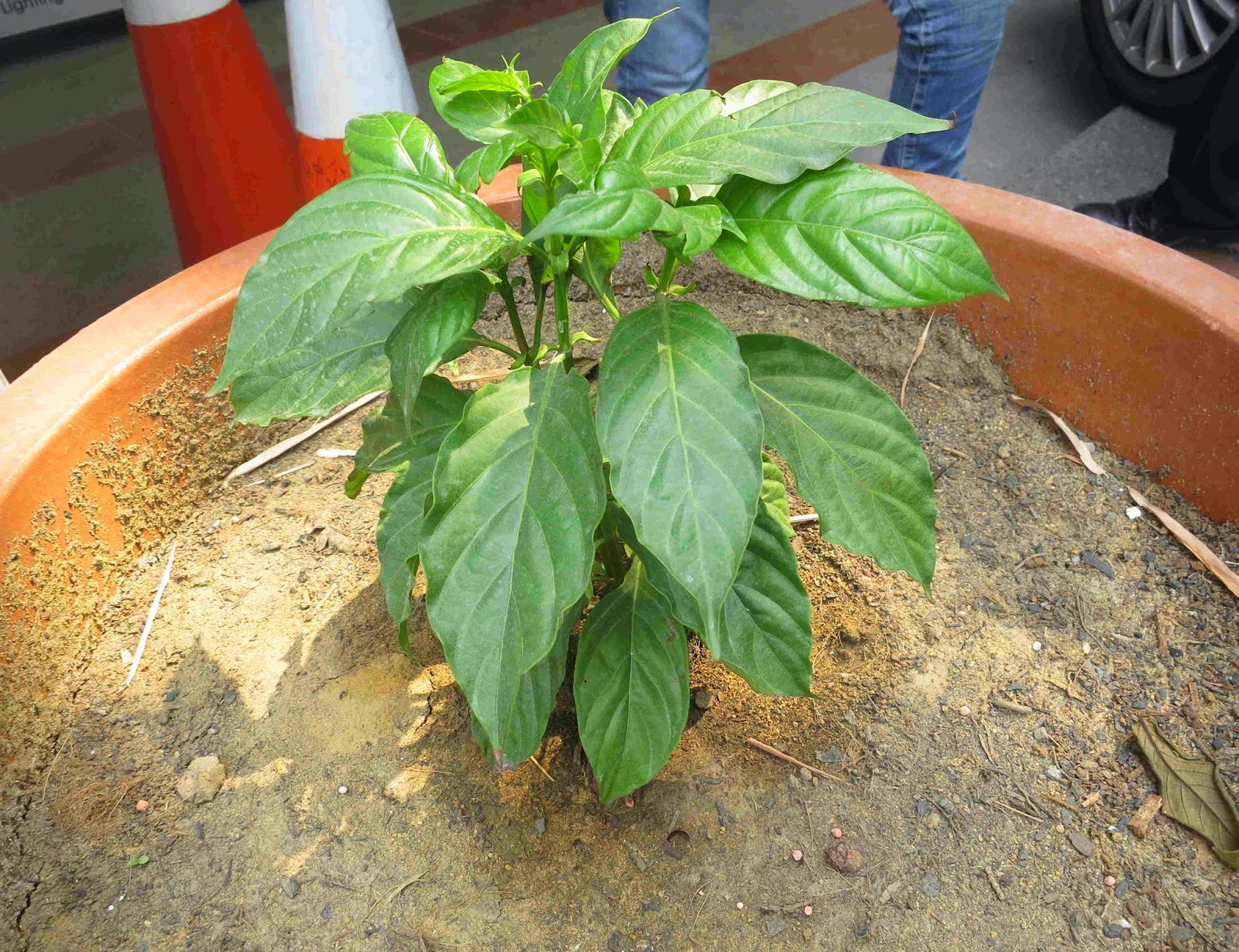
A gambier plant, growing at the museum
was a sample brought back from Indonesia

The legacy of the cultivation of pepper and gambier and the economic development of Johor is carefully persevered in the JB Chinese Heritage Museum.  

The Sharing of Hardships exhibition provides more insight into the history of Chinese-Malay relationships that undergirds the strong support between the Johor sultanate and the Chinese community today.  

So the next time you pass a lamp-post designed with the pepper and gambier motif or saw it on other Johor emblems, you know how these humble plants earned its place of honour in this state. 

Fast Facts

The JB Chinese Heritage Museum at 42, Jalan Ibrahim, Johor Baru, is accessible from two entrances at Jalan Ibrahim (front) and Jalan Tan Hiok Nee (rear). It is open daily from 9am to 5pm and closed on Monday.  For group tours and enquiries, Tel: 607 – 2249 633, Fax: 607 – 2249 635 or email: heritage_museumjb@jb-tionghua.org.my

A version of this article was published in The New Straits Times, Life & Times on 13 November 2014

Iconic pepper & gambier plants

Iconic motifs that feature Johor's 
economic crops, pepper and gambier,
on lamp posts in the city

When you drive along the streets in the city and on the expressways, do you take notice of the designs that decorate the lamp-posts?  

Look closer and you will see that the design features intertwined sprigs of pepper and gambier plants.  

This motif is repeated in several variations on lamp-posts at different locations in the state and is consistently used as a Johor icon.  

This motif however, has become so common that even many local people may not know the historical significance of these plants.  
              
Pepper and gambier have earned a place of honour in Johor because their widespread cultivation played a vital role in the state’s economy in the 1800s.  

At that time, Johor was the world’s largest producer of gambier because large plantations were cultivated with pepper and gambier as the state’s economic crops.  

This is a mind-boggling historical achievement for Johor and it made me think about the strong relationship between the Chinese and Malay communities in the pioneering era.  

When I saw the set of Chinese couplets displayed in the Sultan Abu Bakar Royal Museum within Istana Gardens, presented by Chinese community leaders to the sultan at the inauguration of the Johor Sultanate, I started to dig into history to find out more.
                                
Samples of pepper and gambier displayed in the
Johor Baru Chinese Heritage Museum
In the 1800s gambier plantations in Singapore and the Riau Islands were run by Chinese and Malay farmers and the produce was mainly exported to China.  

Pepper and gambier plants were usually planted together as these plants share a symbiotic relationship and tend to grow entwined around each other.  

The remains of gambier leaves on the ground act as nutrients or fertilizers for pepper plants while protecting the pepper plant roots.  Europe was a major market and the peak of the gambier trade lasted from the 1830s to 1850s.  

Gambier had a big market in the British dyeing and tanning industry which resulted in increased prices and encouraged the Chinese to find fresh land for new plantations. 
                                          
Pieces of processed gambier in a bowl, cutting
tool and gunny sack hook, tools used in the
gambier industry, are carefully preserved
in the Johor Baru Chinese Heritage Museum

In Singapore, the Teochew clan dominated the trade and after about 15 years, when the land they cultivated had become exhausted and infertile, they cleared more forests for fresh land.  

In 1844, when Johor’s ruler, Temenggong Daeng Ibrahim, the father of Sultan Abu Bakar, invited the Chinese from Singapore and Riau to open up land in Johor for pepper and gambier cultivation, Ngee Heng society leader, Tan Kee Soon, led his followers to settle in Tanjung Puteri, the place we now call Johor Baru. 
                                                     
At that time Temenggong Daeng Ibrahim, adopted the kangchu system that was first introduced by Sir Stamford Raffles in Singapore.  

As the waterways was the main mode of transport to Johor from Singapore, early settlers arrived by boat up the infamous Sungai Segget into the heart of Johor Baru.  

Under this administration, Chinese planters who arrived from Riau and Singapore obtained a permit known as, surat sungai, from the ruler to cultivate pepper and gambier. 

A road in Johor Baru is named after the
prominent Ngee Heng society

The Teochew clan was the dominant Chinese clan who made Johor their new home and they settled in designated areas to cultivate pepper and gambier plantations in the kangchu system.  

Kang means “river” in Teochew dialect, while a kangkar is the disembarking point, usually its middle or upper reaches along the river.  

The permit holders were called kangchu’s or river masters and their plantations were named after them as Tan chu kang or Lim chu kang
                                                                     
Even though the Ngee Heng society started as a quasi-military revolutionary brotherhood that was opposed to the Ching dynasty, their activities in Johor Baru gradually evolved into valuable social, political and administrative work which contributed to Johor’s early economic growth.  

Tan Kee Soon was trusted by Sultan Abu Bakar who recognised the strength and solidarity of a brotherhood like the Ngee Heng society but Tan died in 1864 and did not live to see his society legalised by the sultan as an association in 1873.  

This Chinese association, with its membership opened to the other Chinese clans and assigned to take charge of Chinese community affairs in Johor, was the forerunner of the Johor Baru Tiong Hua Association.  

Pepper and gambier motifs are carved into a
wooden design that adorn the entrance to the
Johor Chief Minister's office in the
Sultan Ibrahim Building at Bukit Timbalan

Gambier was traditionally prepared by boiling the young leaves, pressing them to extract juice and then drying the juice concentrate and moulding it into a block, cake or cube form.  

For a glimpse of how processed gambier looks like, visit the JB Chinese Heritage Museum to see some samples of gambier in the displays.
                                                           
Plantations in Johor sold their gambier to businessmen in Singapore, the main centre for gambier trade in collecting and exporting the produce, until the dawn of the 20th century.  

The introduction of pineapple canning in 1888 resulted in the expansion of the pineapple industry in Johor and the rapid development of the motorcar industry sparked off a very high demand for rubber.  

By the early 20th century, gambier was replaced by pineapple and rubber as the most important plantation crops in this region.

Pepper and gambier motifs rendered
in pewter are beautifully applied
to the decor in the Johor State
Assembly Hall of the Sultan Ismail
Building at Kota Iskandar

Some of Johor’s prominent kangchu’s were Tan Kee Soon, Tan Hiok Nee, Lim Ah Siang and Wong Ah Fook.  

The roles of these people and the Ngee Heng society in Johor’s history are recognised by roads in our city like Jalan Wong Ah Fook, Jalan Tan Hiok Nee, Jalan Ah Siang and Jalan Ngee Heng.  

Today, areas in Johor Baru that were once huge plantations still use names like Kangkar Tebrau and Kangkar Pulai as a legacy of this plantation culture.  

The Tan chu kang, established by Tan Kee Soon in Kangkar Tebrau, is the oldest known Chinese settlement in Johor.  

Incidentally, Yeo chu kang and Choa chu kang in Singapore, also retained their plantation names even though the sites have been redeveloped into modern precincts. 

So the next time you pass a lamp-post designed with the pepper and gambier motif or saw it on other Johor emblems, you know how these humble plants earned its place of honour in this state.  

While its cultivation contributed significantly to Johor’s economic progress, it also represents the legacy of the strong relationship between the Chinese and Malay communities in Johor.

A version of this article was published in the September 2014 issue of The Iskandarian